Top 10 common myths about dancing you should stop believing
Many people have misconceptions about dancing that can make it difficult to get started. The polished image of dance on TV, social media and in professional performances can make it seem intimidating or out of reach. You might think you need natural talent, good rhythm, previous experience or a certain body type to dance. In reality, dance is much more accessible than it may seem. Anyone can learn to dance and enjoy it!
In this article, we’ll break down 10 common myths about dancing and explain the reality behind them, so you can leave these misconceptions behind and start your own dance journey with confidence.

Why dance myths exist

Dance myths often come from what people see on social media, TV and in professional performances. We usually see the end result: clean choreography and skilled dancers, rather than the years of practice, mistakes and setbacks behind it.
This can make it seem like great dancers are simply born talented. In reality, dance skills develop through practice, repetition and consistency. Natural ability can help at first, but long-term progress depends much more on the work you put in.
The media can also reinforce stereotypes about needing a certain body type, flexibility or fitness level. These ideas are outdated. Dance is accessible to different bodies and abilities.
So, don’t compare yourself to polished performances online. You are seeing the result, not all the training and mistakes it took to get there.

Myth 1: you need natural talent to dance
One of the most common myths about dancing is that you need natural talent to become a good dancer. While natural ability can give you an advantage at the beginning, discipline and consistency are much more important in the long run. When you watch a professional dancer perform, remember that you are seeing the result of years of practice, dedication and learning from mistakes.
Skills such as rhythm, coordination and body control can all be developed through practice and repetition. Many dancers who are not naturally gifted become highly skilled because they develop a strong work ethic and keep challenging themselves. Ultimately, how far you progress depends much more on the effort you put in than the talent you start with.
Example of dancer who trained his way into becoming incredible:
Myth #2: you have to start young

Dancing is for everyone, regardless of age. Still, many people believe that you can only become a good dancer if you start young. Starting early certainly has advantages, but it is not a requirement. Many dancers begin later in life and still reach a high level.
Adults can actually have some advantages when learning to dance. They are often better at understanding instructions, analysing movements and practising with a clear purpose. Adults also usually choose to start dancing because they genuinely want to, which can provide strong motivation to keep learning.
A dedicated adult can make great progress with consistent and focused practice. Instead of worrying about when you started, focus on what you can do now. And remember, becoming a great dancer is not the only goal. The enjoyment, confidence and personal growth you gain from dancing are just as important.
Myth #3: you need good rhythm before starting

Many people think that you either have a natural sense of rhythm or you don’t. While some people may find rhythm easier at first, it is a skill that anyone can develop through practice. Someone who struggles to even clap on beat as a beginner can eventually learn to dance confidently to much more complex rhythms.
There are many ways to improve your sense of rhythm. You can start by clapping along to the beat, then progress to steps, bounces, arm movements and other dance techniques. As you practise, you will become better at recognising rhythmic patterns, accents and different layers in the music. Rhythm is something you develop, not something you need before you start dancing!
Myth #4: dancing is only for certain body types

A common and harmful myth is that you need a certain body type to be a good dancer. People often imagine dancers as athletic, slim and flexible, which can make those who do not fit that image feel insecure or believe that dance is not for them.
In reality, every dancer has a different body and develops their own way of moving. Some dancers are naturally explosive and powerful, while others stand out through fluidity, precision or control. Your height, shape and build can even give your movement a unique quality.
That individuality is part of what makes dance so interesting. People will remember you for your movement, energy, charisma and personal style, not because you have a particular physique. Dance is not about having the “right” body. It is about learning how to express yourself with the body you have.
Myth #5: freestyle is just random movement

Freestyle is sometimes misunderstood as simply doing random movements on the spot. In reality, experienced freestyle dancers have spent years building a vocabulary of techniques, grooves, steps, textures and concepts. Through practice, they learn how to combine and adapt these movements without planning them in advance.
Skilled freestyle dancers make creative decisions in the moment based on what they hear and feel. They respond to the music while thinking about timing, flow, control and expression. It may look spontaneous and effortless, but that freedom comes from many hours of practice.
Freestyle can therefore be described as structured creativity. The movements are improvised, but they are built on knowledge, experience and skills developed over time. The more you practise, the more freedom you have to make creative choices in the moment.
Myth #6: choreography must be copied perfectly
Many people believe that choreography is only performed well when it is copied exactly as the choreographer originally performed it. While dancers should aim to match important elements such as timing, shapes, groove and intention, that does not mean everyone needs to look exactly the same.
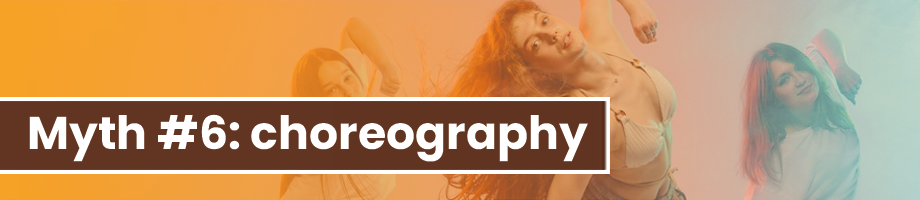
Every dancer has a different body, style and way of moving. Bringing some of your own personality into a choreography can actually make the performance more interesting and expressive. These small differences give each dancer individuality while still keeping the choreography together.
When learning choreography, first focus on getting the movements, timing and intention right. Once you feel comfortable with the choreography, you can add your own flavour and expression.
Just look at the example below, where each dancer does the choreography with their own flavour and expression:
Myth #7: dance is not a real workout

Many people think dancing isn’t a real workout. In reality, dance can require a high level of strength, endurance, flexibility and coordination.
Some dance styles are especially physically demanding, with jumps, floorwork and quick transitions that require you to constantly control your entire body. Regular dance training can build muscle strength, improve stamina and develop coordination, making it just as challenging as many conventional forms of exercise.
Dance also challenges you mentally. You need focus to learn movements, remember combinations and stay in time with the music. Because dance is driven by music, creativity and expression, it may not always feel like a traditional workout. But ultimately, dancing can be a full-body workout that challenges both your body and mind.
Breaking is an example of a dance form that is a real athletic workout.
Myth #8: you need expensive classes or gear

Many people think that learning to dance requires expensive classes, a professional studio and special dance gear. In reality, you can start with little more than some space and music. You can practise in your living room, bedroom, garage or even outdoors. A professional dance environment can be helpful, but it is certainly not the only way to improve.
Today, learning dance is also more accessible than ever. You can find tutorials, exercises and information online through social media, YouTube and online dance platforms. We at MyGrooveGuide allow beginners to learn the foundations and practise from home at their own pace.
Ultimately, your progress does not depend on expensive classes or facilities. Consistent practice, patience and dedication are much more important. You can become a better dancer wherever you choose to practise.
Myth #9: mistakes mean you are not improving
Many people see mistakes in dance as a sign of failure. In reality, making mistakes is an important part of learning to dance. They show you which areas still need work and help you understand what to focus on next.
Don’t let mistakes discourage you. Dancers who improve quickly are often those who learn from what goes wrong and use it as feedback. Instead of avoiding difficult movements, they keep practising them until they improve.
Making mistakes, trying again and correcting yourself is part of the learning process. In dance, mistakes are not a sign that you are failing. They are often a sign that you are challenging yourself and improving.
Myth 10: you need confidence before you start

Many people think you need to be confident before you can start dancing. In reality, confidence is something you build through experience. When you try something new, it is completely normal to feel nervous, uncomfortable or unsure of yourself.
Confidence grows through repetition and small victories. Every time you master a movement, overcome a challenge or notice your progress, you start to trust yourself a little more. Over time, these small successes add up and you begin to feel more comfortable expressing yourself through dance.
Starting can feel intimidating, but you don’t need to wait until you feel confident. Take the first step, keep practising and let your confidence grow along the way.
The impact of these myths on dancers

These myths can have a negative impact on how people feel about starting dance. If you believe that you need the right body, natural talent or confidence before you can begin, dancing can feel intimidating or even out of reach. In reality, these things should never stop you from learning.
Instead of focusing on what you think you lack, focus on your own strengths and what makes you unique as a dancer. Constantly comparing yourself to others can easily lead to self-doubt and insecurity.
Every dancer has a different starting point and develops at their own pace. Focus on your own progress, set realistic goals and celebrate the improvements you make along the way.
What actually helps you improve in dance

Improving at dance is actually quite simple. Practise consistently, be patient and give yourself time to develop. Start with the foundations instead of jumping straight into flashy or difficult moves. Grooves, timing, control and basic movement patterns may not look as impressive, but they provide the foundation for everything you learn later.
Feedback is another important part of improving. Don’t be afraid to make mistakes or receive corrections from others. Instead, use them to understand what you can improve and keep working on the areas you find difficult.
Most importantly, enjoy the process. If you focus too much on becoming perfect, it is easy to forget why you started dancing in the first place. Stay curious, celebrate small wins and enjoy learning. With consistency and the right mindset, improvement will follow naturally.
Conclusion

These myths can create unnecessary barriers for people who want to start dancing. You don’t need a certain body type, natural talent, perfect rhythm or confidence before you begin. Dance is accessible to everyone, and many of these skills develop naturally through practice.
The most important step is simply to start. Once you do, you’ll realise that dancing is not about being perfect. It is about expression, personal growth and, most importantly, enjoying the process.
If you’re ready to take that first step, MyGrooveGuide is a great place to start. With online dance classes for different styles and levels, you can learn the foundations, practise at your own pace and build your skills and confidence from home. See our overview of classes and join now!
Structured Hip Hop Classes That Build Confidence.
Boost your rhythm and technique with step-by-step classes from world-class hip hop instructors.
Get started